Key Words:
Dance; Avatar; Kinect; Improvisation; Movement
Venues:
Hong Kong Research Grants Council Theme-based Research Scheme, General Research Fund
Abstract:
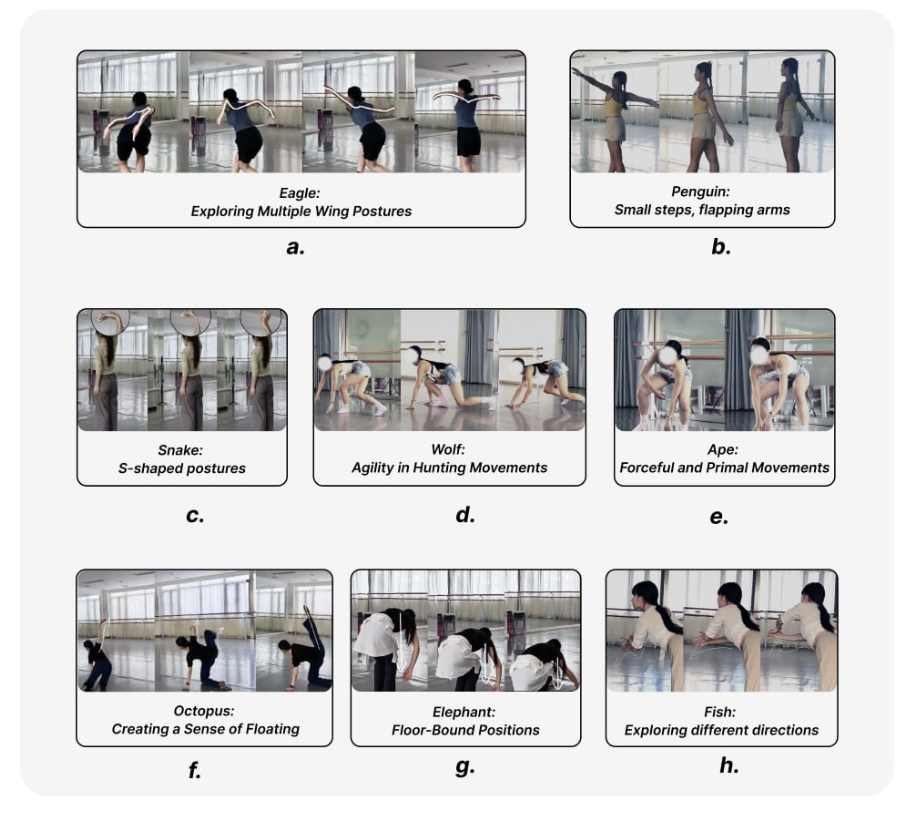
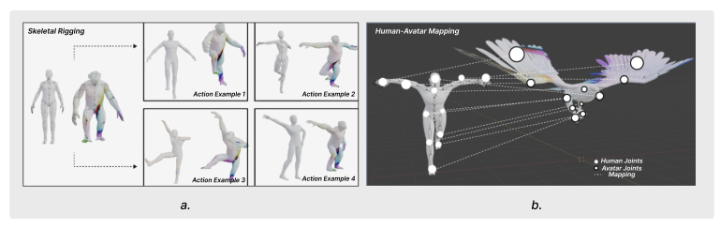
Dancers often look at the mirror to get feedback about how they perform. Digital avatars are a form of mirroring enabling performers to inhabit bodies unlike their own, creatively acting out movements beyond what they are used to when looking at the mirror. This has inspired recent work in motion-capture (mocap) avatar-mediated performances that often utilize nonhuman forms, but how dancers react to the affordances of different forms in creative performance is not known. We designed eight animal avatars with diverse anatomies and conducted workshops with 16 professional dancers. We found that bipedal avatars fostered agency and ownership, while limbless forms demanded tactics such as prioritizing salient organs or decomposing movement into subunits. Dancers often reinterpreted avatars to fit their own improvisation, reinterpreting a fish as a bird, for example. Our work uncovers human adaptation strategies in working with digital forms unlike themselves, providing insights for empowering their creativity.